
Reengineering Distribution: Building a Vertically Integrated Energy Ecosystem in Nigeria

Reengineering Distribution: Building a Vertically Integrated Energy Ecosystem in Nigeria

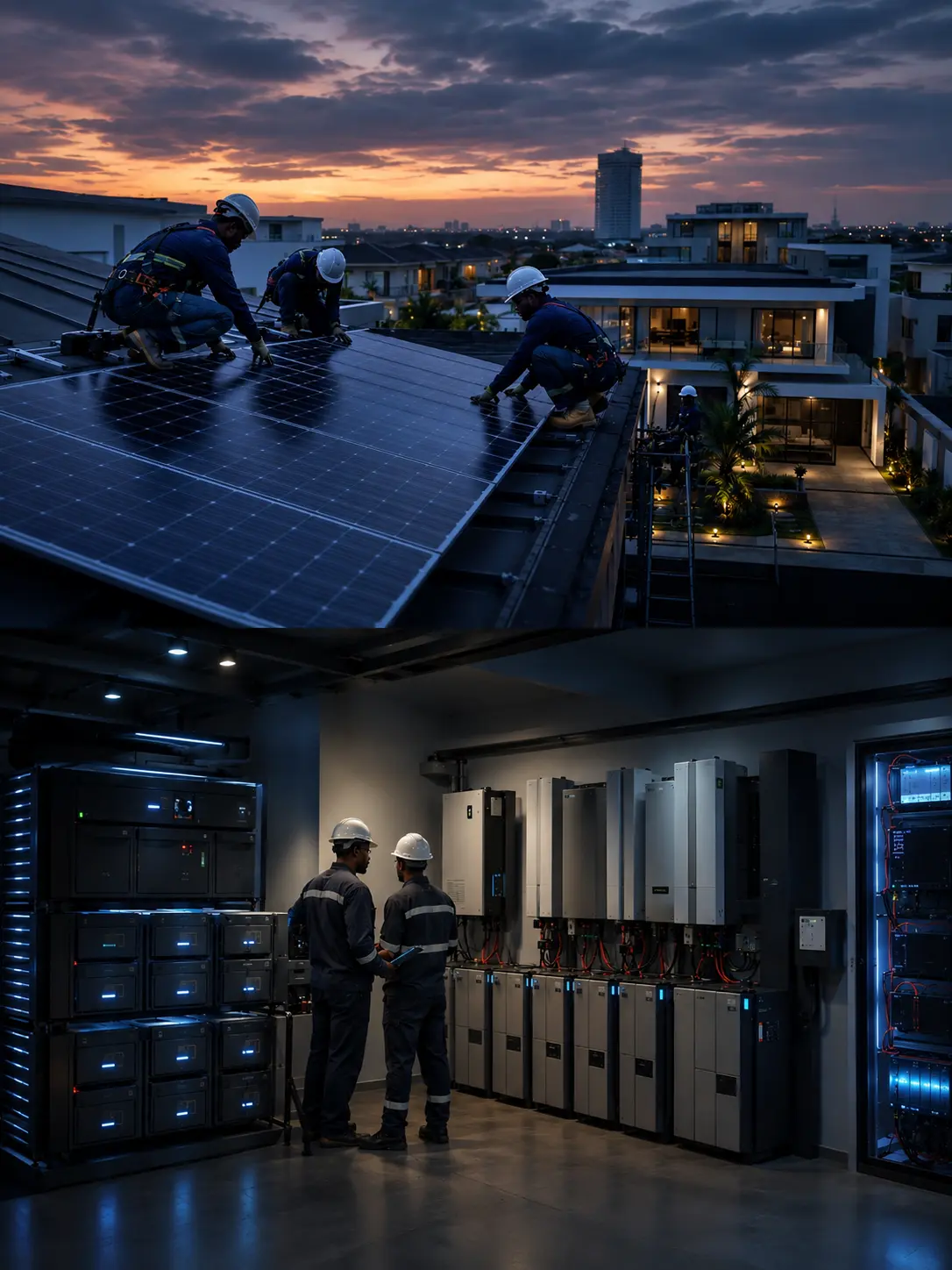
As Nigeria’s distributed solar market continues to expand, long-term infrastructure sustainability will increasingly depend not only on energy deployment itself, but also on the development of:

  • localized manufacturing capacity,
  • refurbishment ecosystems,
  • second-life energy systems,
  • and structured solar recycling infrastructure.

Over time, the economics of distributed energy financing will be materially strengthened by the ability to:

  • recover valuable materials,
  • extend equipment lifespan,
  • reduce replacement costs,
  • optimize procurement,
  • and locally retain value currently lost through import dependence and unmanaged solar waste.

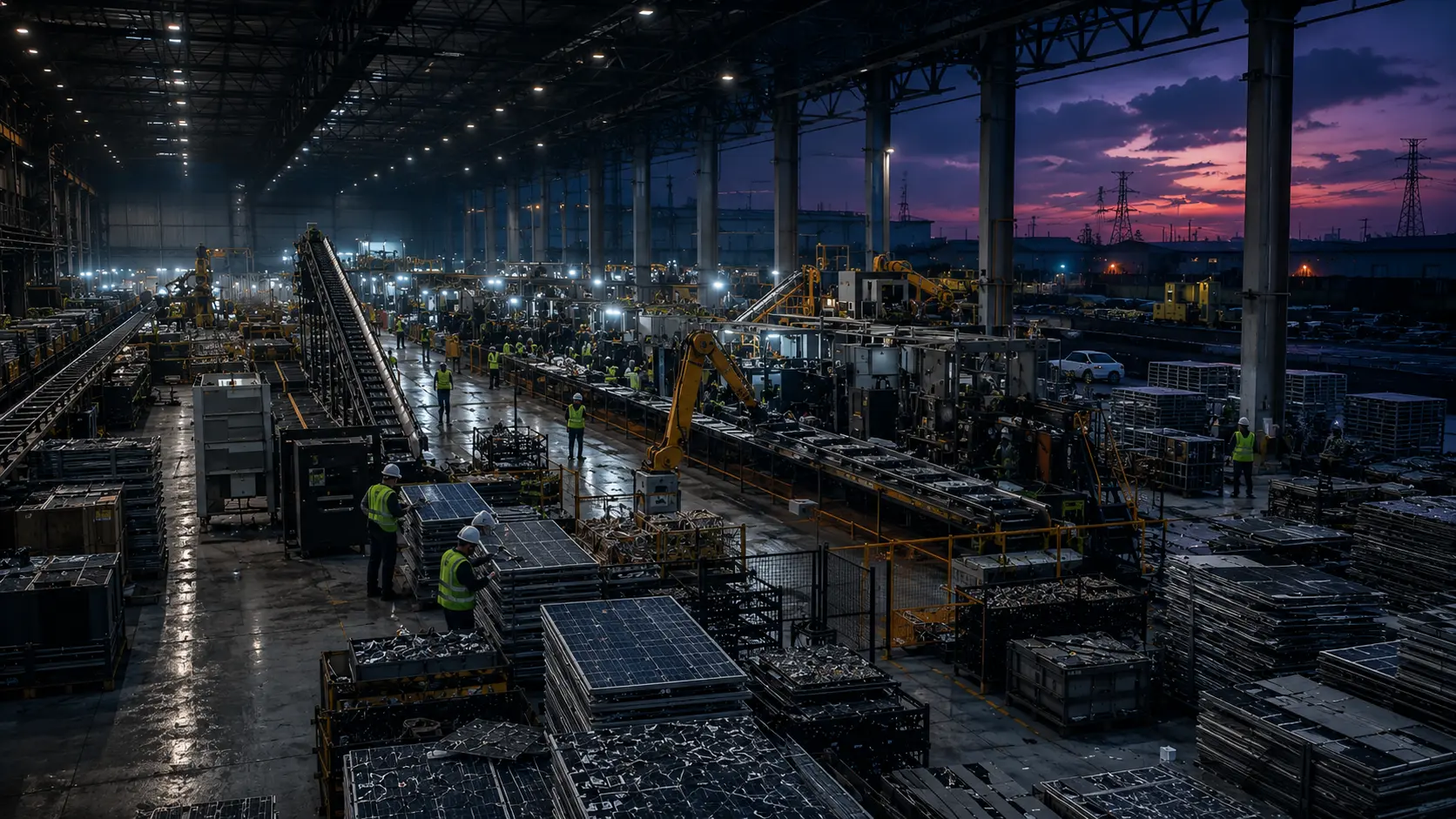
This transforms solar recycling and local assembly from merely environmental considerations into: strategic infrastructure-finance components.

Recyclable Components Across the Solar Value Chain

Contrary to common assumptions, a significant portion of modern solar infrastructure is either:

  • recyclable,
  • reusable,
  • refurbishable,
  • or economically recoverable.

Across a standard residential solar deployment, recoverable materials exist within:

  • solar panels,
  • lithium batteries,
  • hybrid inverters,
  • charge controllers,
  • mounting systems,
  • electrical wiring,
  • and associated balance-of-system components.

1. Solar Panels (PV Modules)

A standard solar panel typically contains:

  • glass,
  • aluminum framing,
  • silicon cells,
  • copper wiring,
  • silver traces,
  • polymer backsheet materials,
  • and encapsulant layers.

The most economically recoverable components include:

  • aluminum frames,
  • copper,
  • glass,
  • and portions of the silicon substrate.

Even partially degraded solar panels often retain: 50–80% of original generating capacity.

As a result, many “end-of-life” panels can still be:
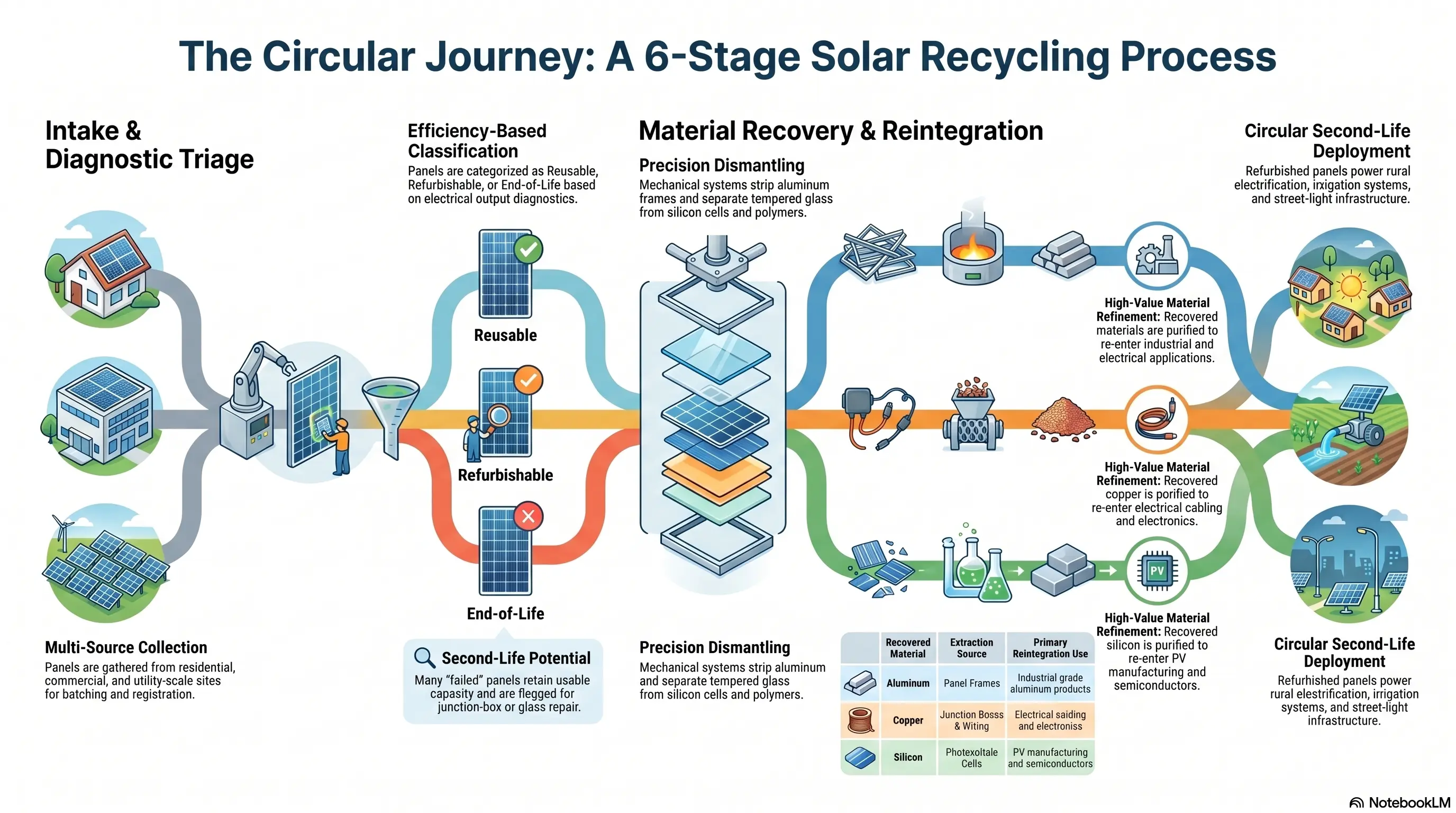
  • refurbished,
  • redeployed,
  • or repurposed for:
    • rural electrification,
    • irrigation systems,
    • low-load commercial operations,
    • and secondary distributed energy applications.
publication_info_img_alt
publication_info_img_alt_mobile

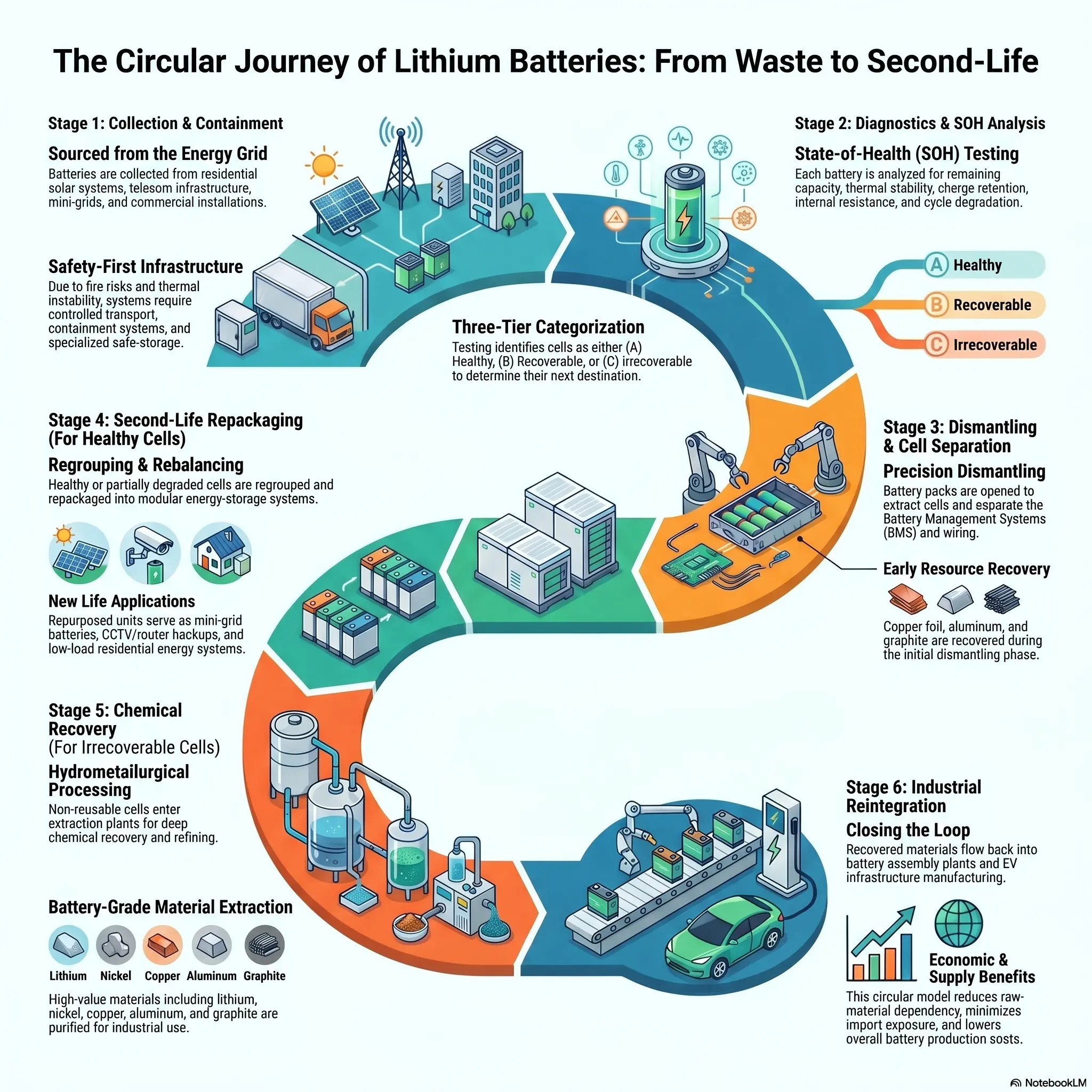
2. Lithium Solar Batteries

Modern LiFePO4 and lithium-ion battery systems contain:

  • lithium compounds,
  • copper foil,
  • aluminum,
  • graphite,
  • steel casings,
  • electronic Battery Management Systems (BMS),
  • and recoverable electronic materials.

In many failed battery systems:

  • only a subset of cells are degraded,
  • while large portions of the battery pack remain operational.

This creates substantial opportunity for:

  • battery refurbishment,
  • cell harvesting,
  • second-life battery systems,
  • and modular energy-storage repackaging.
Partially degraded batteries can still reliably power:
  • lighting systems,
  • routers,
  • POS systems,
  • CCTV infrastructure,
  • and low-load residential applications.

3. Hybrid Inverters & Electronics

Hybrid inverters contain:

  • aluminum heat sinks,
  • copper windings,
  • transformers,
  • semiconductor components,
  • cooling systems,
  • and printed circuit boards (PCBs).

Many failed inverters are not structurally damaged, but instead suffer from:

  • capacitor failure,
  • relay faults,
  • overheating,
  • cooling fan failure,
  • firmware corruption,
  • or damaged MOSFET/IGBT components.

This makes inverter refurbishment highly viable.

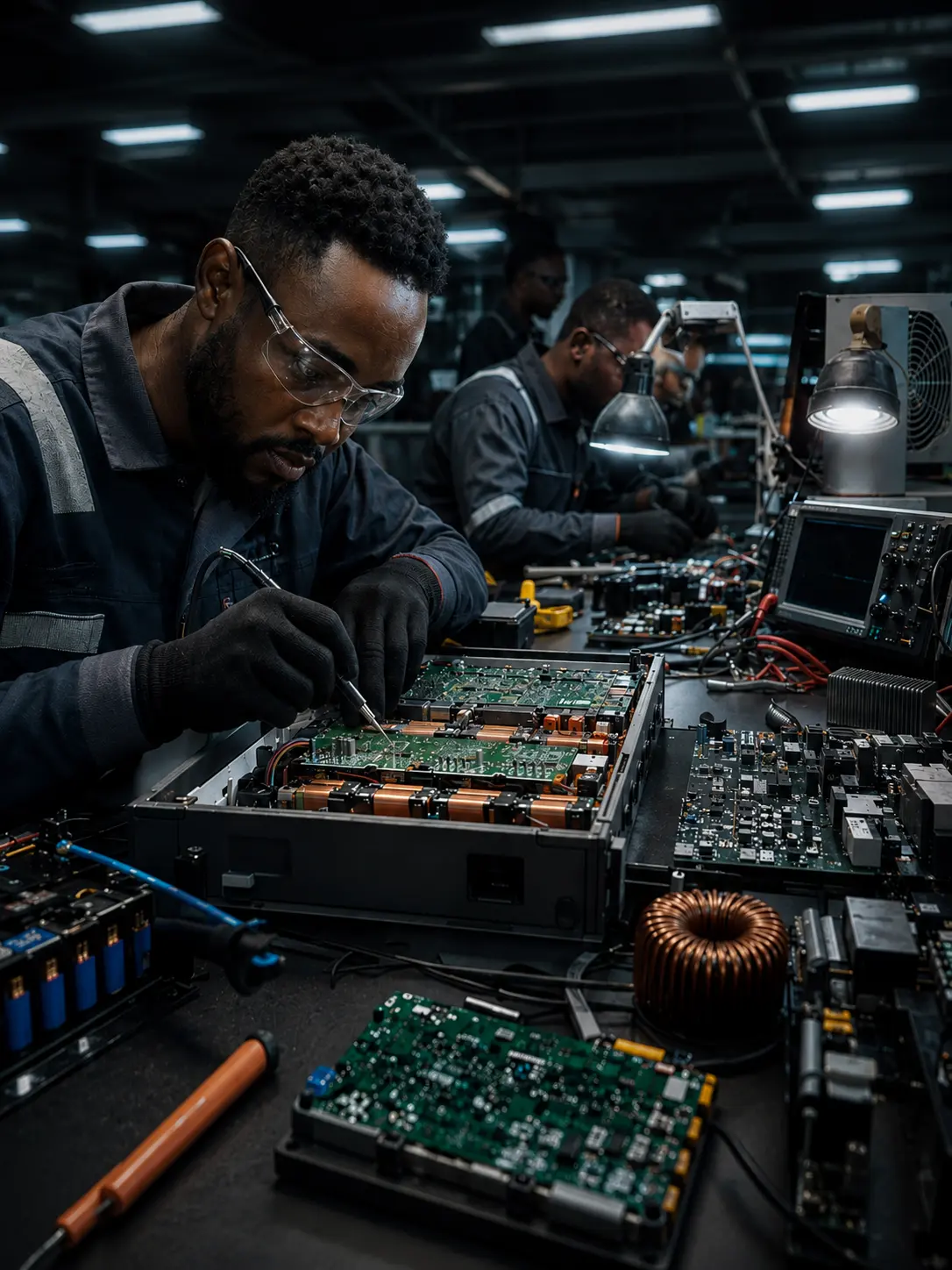
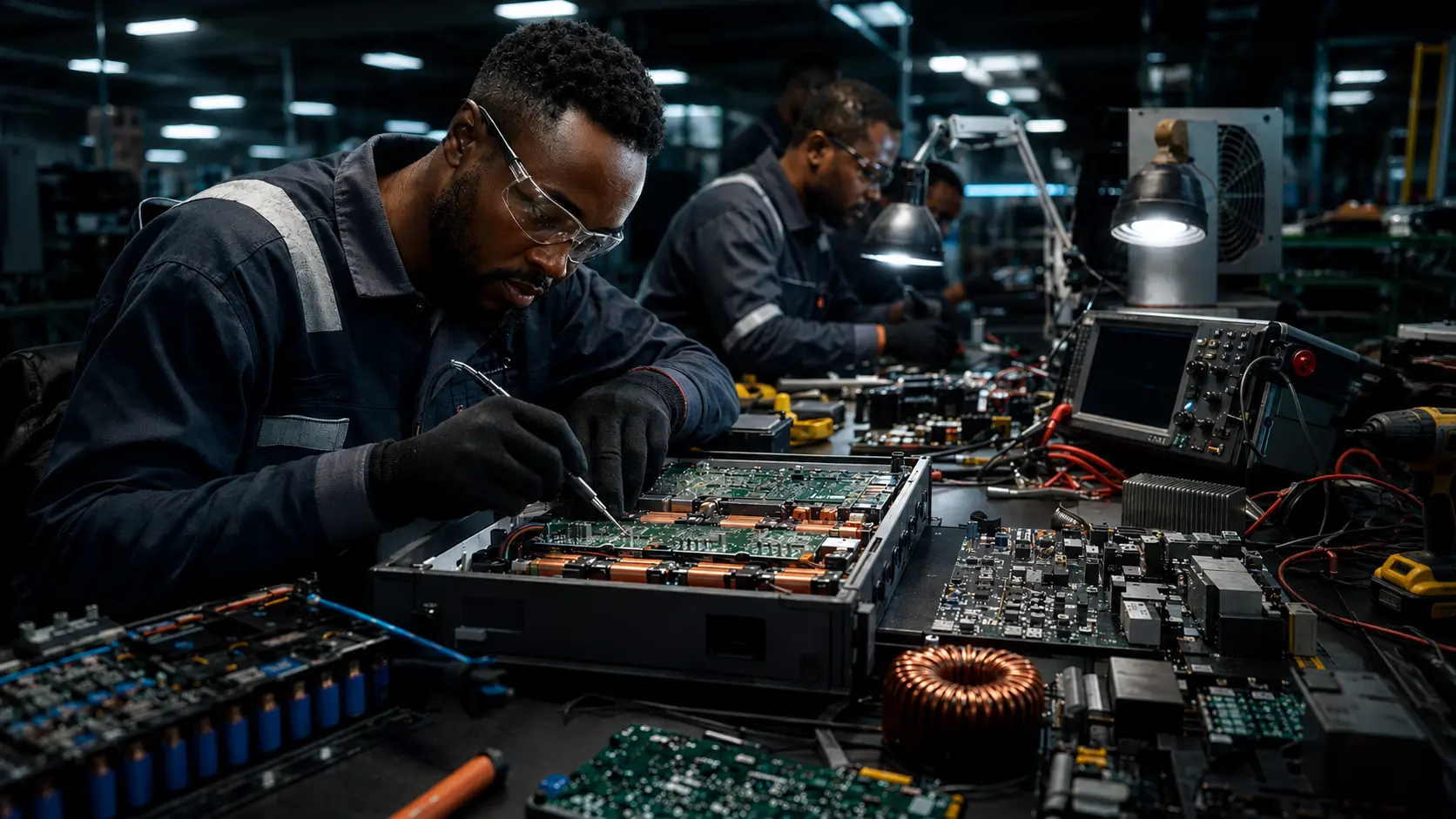
Importantly, Nigeria already possesses strong informal technical repair ecosystems across: Lagos, Onitsha, Aba, Kano, and other commercial hubs.

These existing capabilities can evolve into structured solar-electronics refurbishment industries.

Current Recycling & Recoverability Potential in Nigeria

Even under current infrastructure limitations, a surprisingly large percentage of “spoilt” solar infrastructure in Nigeria remains economically recoverable.

Industry-aligned estimates suggest that total recoverable material and economic value across solar-system components can exceed: 75–90%

when:

  • refurbishment,
  • second-life deployment,
  • component harvesting,
  • and material recycling
  • are combined.

However, due to limited formal recycling infrastructure, Nigeria is currently estimated to capture only: approximately 20–40% of total recoverable value.

This represents:

  • massive economic leakage,
  • lost industrial opportunity,
  • and long-term strategic inefficiency.

The Emerging Volume Problem

Nigeria’s solar adoption curve is accelerating rapidly, as distributed solar deployment expands across:

  • households,
  • SMEs,
  • telecom infrastructure,
  • estates,
  • financial institutions,
  • and mini-grid ecosystems,

the country will inevitably experience rising volumes of:

  • aging lithium batteries,
  • failed inverters,
  • degraded solar panels,
  • obsolete charge controllers,
  • and electronic energy waste.

Without structured intervention, this could evolve into, a major future e-waste challenge.

However, under the right industrial framework, the same challenge becomes: a multi-billion-naira circular-energy opportunity.

Strategic Integration Into the Distributed Energy Financing Model

For a large-scale distributed energy-financing platform, recycling and local assembly provide several strategic advantages:

Strategic Benefit Impact
Lower hardware replacement cost Improves long-term margins
Refurbished secondary-market systems Expands low-income accessibility
Second-life batteries Reduces storage acquisition cost
Local assembly Reduces FX exposure
Component harvesting Improves asset recovery value
Domestic processing capacity Retains economic value locally
Recycling ecosystems Creates new revenue layers
Supply-chain optimization Improves deployment scalability

Over time, these efficiencies materially improve:

  • portfolio economics,
  • affordability,
  • infrastructure scalability,
  • and long-term investor returns.
  • Local Assembly as a Strategic Infrastructure Layer

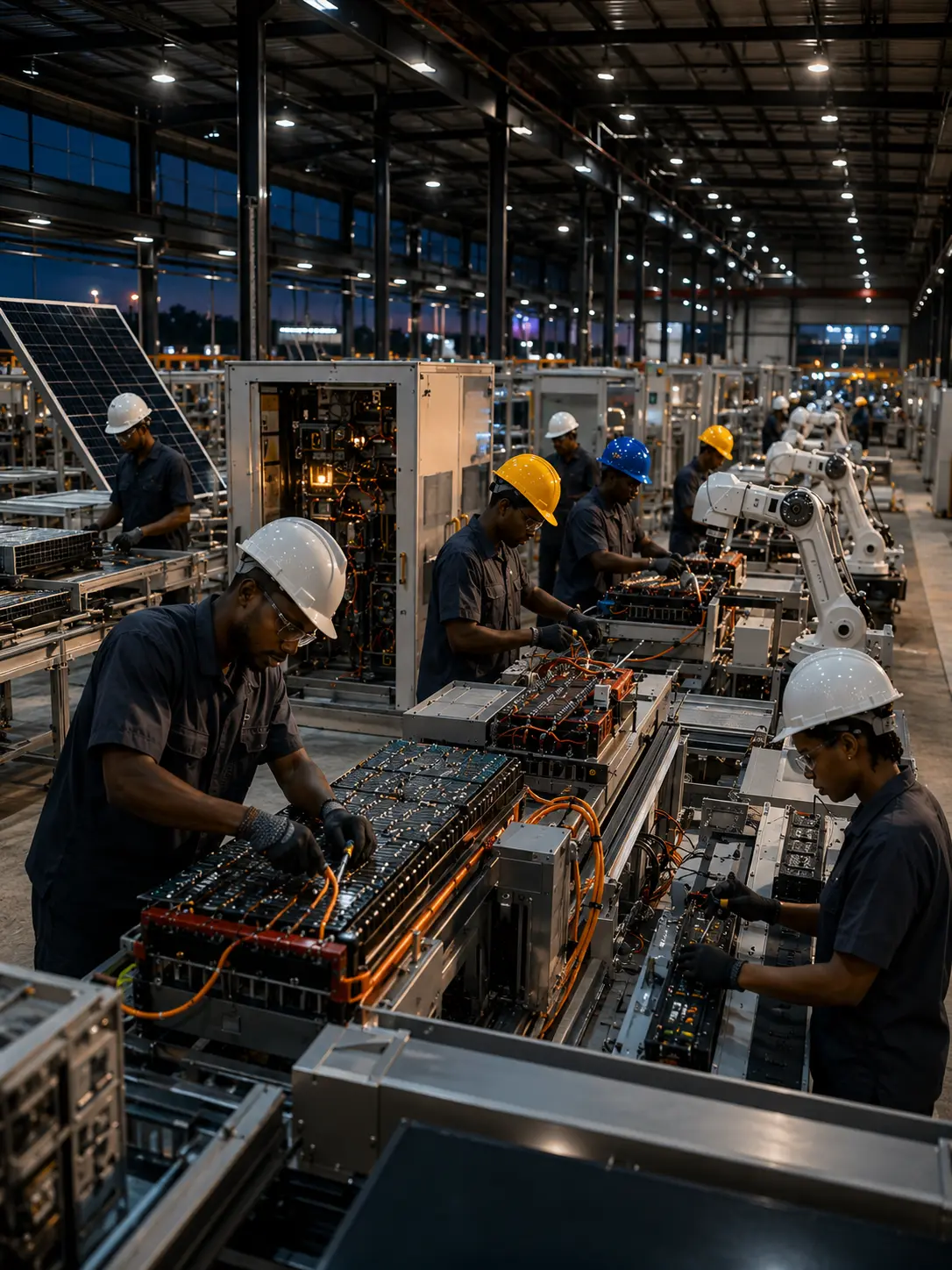
Beyond recycling, localized assembly infrastructure becomes increasingly important as deployment scales nationally.

Heavy dependence on imported:

  • batteries,
  • inverters,
  • solar panels,
  • and balance-of-system components

creates:

  • FX vulnerability,
  • supply-chain instability,
  • pricing volatility,
  • and long procurement cycles.

Local assembly ecosystems can progressively reduce:

  • deployment cost,
  • import dependence,
  • and hardware acquisition risk.

Potential long-term assembly opportunities include:

  • battery-pack assembly,
  • inverter assembly,
  • panel framing,
  • mounting-system fabrication,
  • cable production,
  • and electronic control-system integration.

As deployment volume increases nationally, localized assembly can materially improve:

  • capital efficiency,
  • deployment speed,
  • pricing stability,
  • and overall infrastructure resilience.

The Bigger Long-Term Opportunity

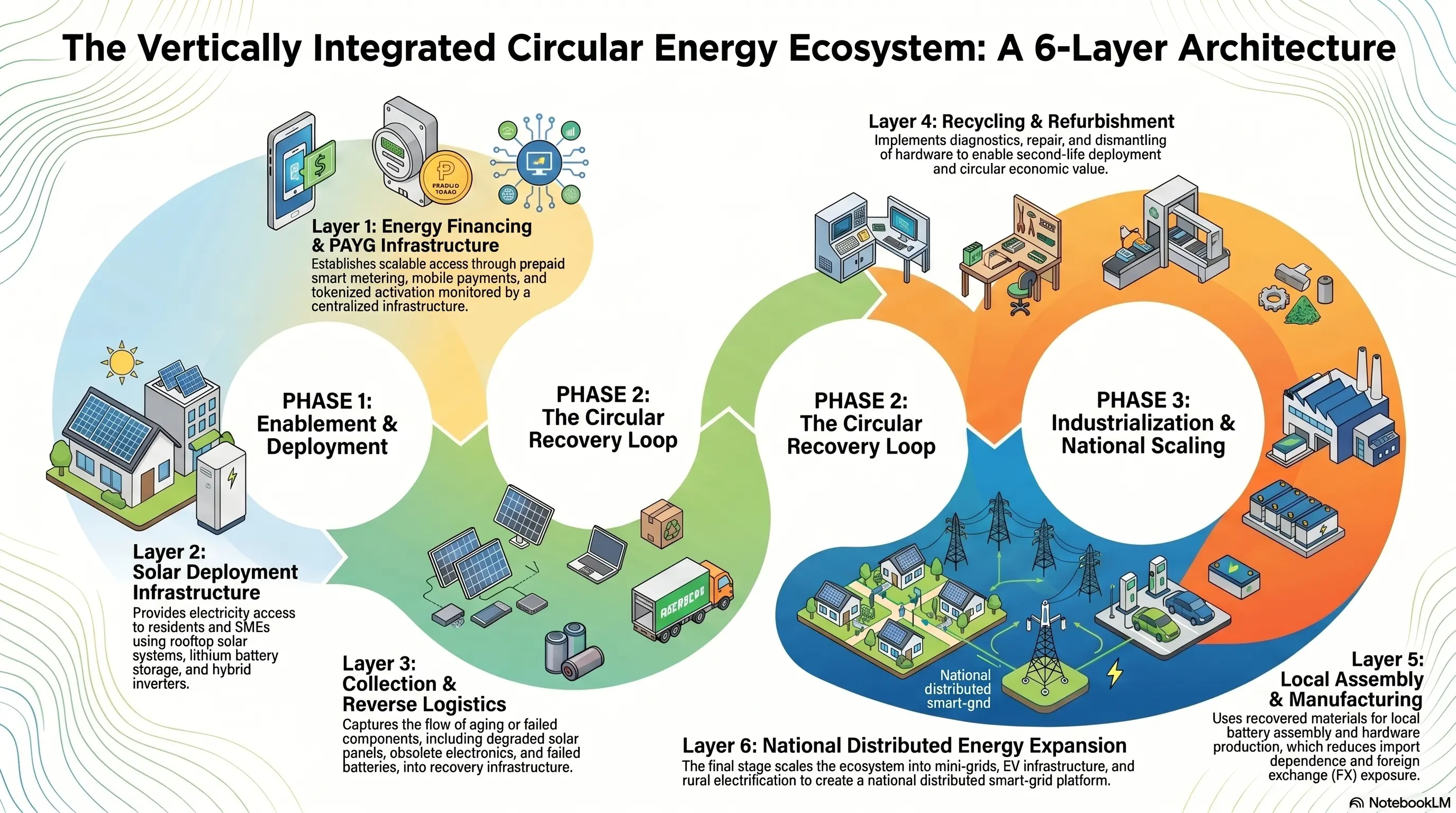
The long-term opportunity is not merely, deploying solar systems.

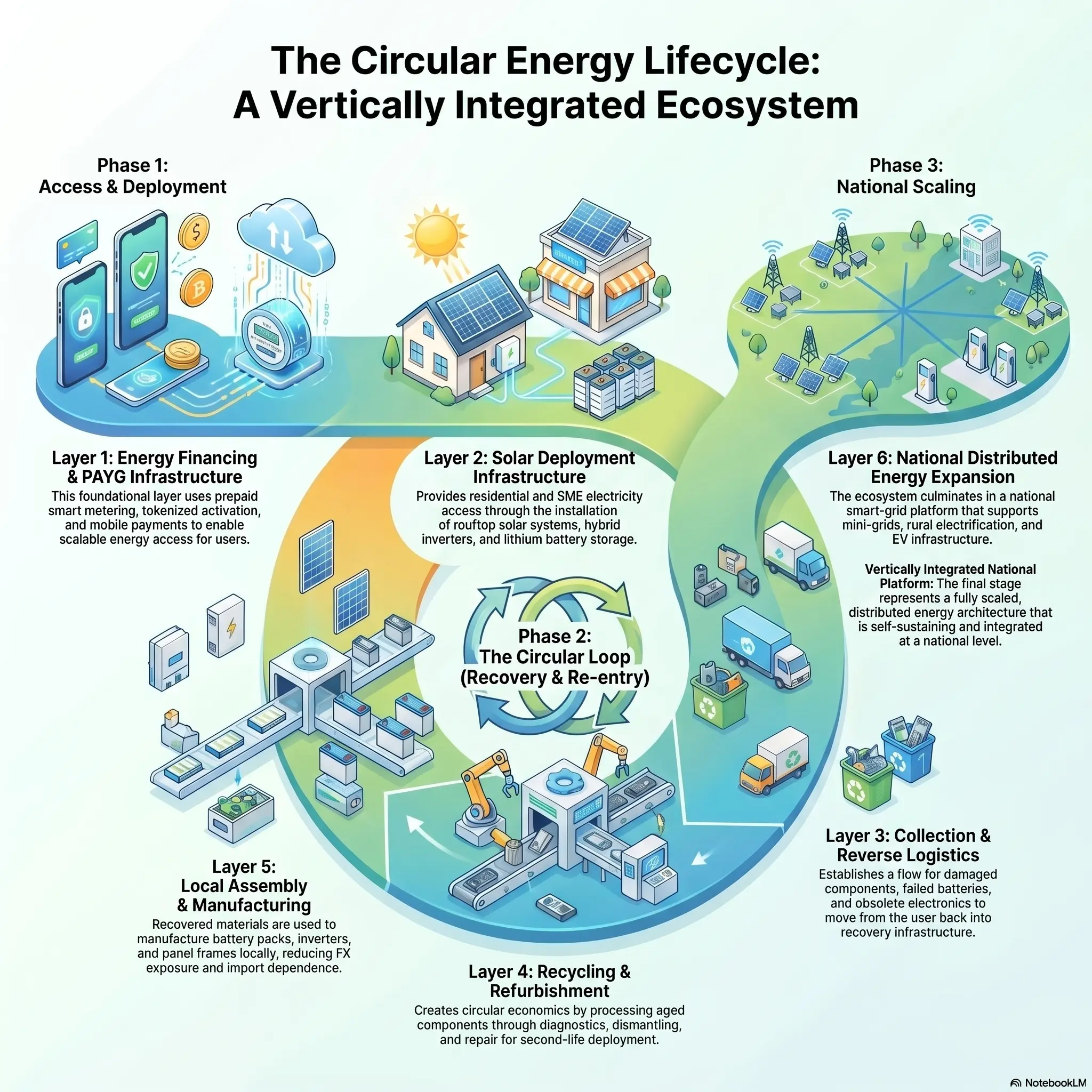
The larger opportunity is building: a VERTICALLY INTEGRATED DISTRIBUTED ENERGY ECOSYSTEM.
publication_info_img_alt
publication_info_img_alt_mobile

One that eventually combines:

  • energy financing,
  • solar deployment,
  • smart metering,
  • asset management,
  • refurbishment,
  • recycling,
  • localized manufacturing,
  • and second-life energy infrastructure.

At scale, this creates:

  • stronger infrastructure economics,
  • deeper local industrial participation,
  • lower system costs,
  • improved energy accessibility,
  • and significantly more resilient distributed power infrastructure for Nigeria.

Related Works

author_img_alt

Fortune Felix works across business operations & growth, digital operations, and client management, with experience supporting business operations across local and international markets.